Pipe insulation: efficiency, comfort and long-term system protection
Reading time: 3 minutes
Pipe insulation is essential for keeping fluid temperatures stable and improving overall system efficiency. Uninsulated or poorly insulated pipework loses heat in heating circuits and gains heat in air-conditioning and refrigeration systems.
Effective insulation helps reduce energy consumption, improve comfort, prevent condensation and protect pipes, fittings and valves over time.

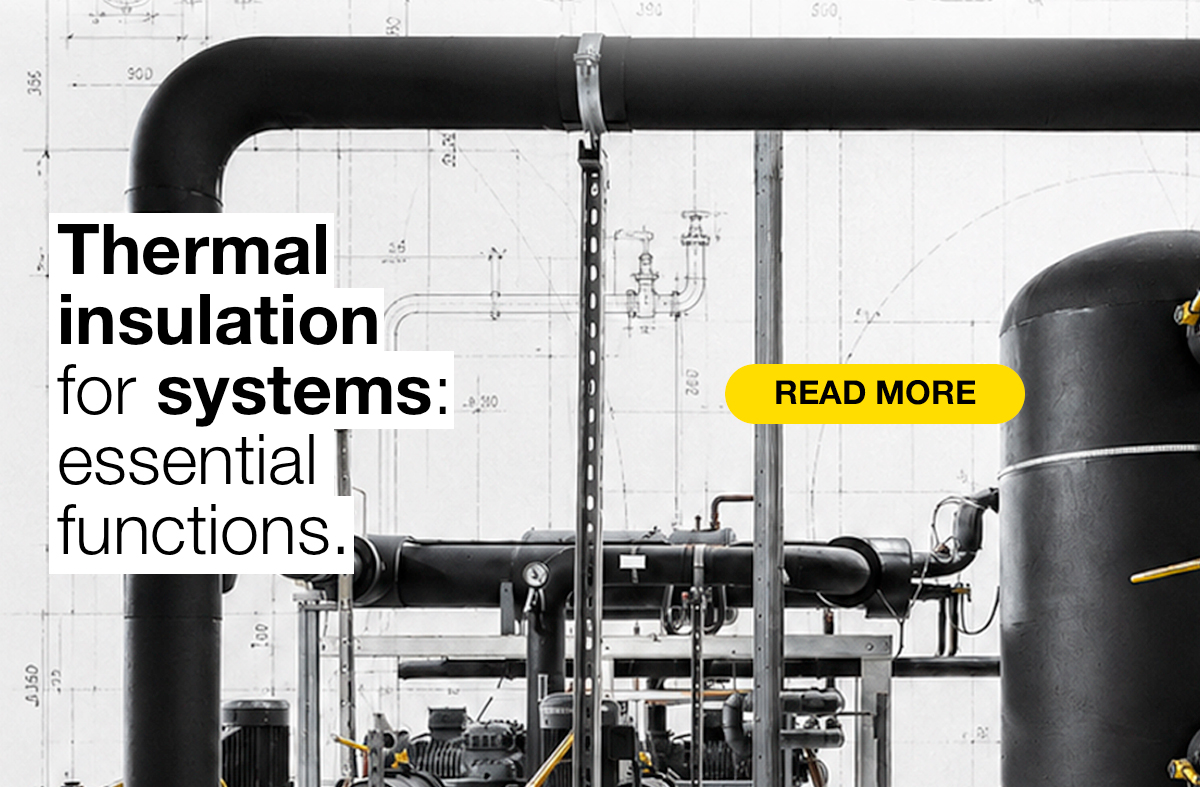
This image is provided for demonstration purposes only. As it was generated with the support of AI, it may contain inaccuracies or simplified representations.
Why pipe insulation matters
Every pipe acts as a heat-exchange surface with the surrounding environment. Without proper protection, the fluid inside the pipe can lose or gain heat along the route, forcing heat generators, heat pumps, boilers or refrigeration systems to work harder.
In domestic hot water systems, insulation helps limit heat loss and can reduce waiting times at points of use. In HVAC/R applications, it helps the fluid reach terminals and air handling units under the conditions defined by the system design.
Condensation and system protection
On cold pipework, condensation forms when the surface temperature drops below the dew point of the surrounding air. This can lead to dripping, damage to finishes, loss of insulation performance and the risk of corrosion under insulation.
For this reason, in addition to thermal conductivity λ, it is important to consider water vapour diffusion resistance μ, the continuity of the vapour barrier and accurate installation around joints, bends, valves and pipe supports.
What to consider when choosing insulation

Effective insulation does not depend on thickness alone. The main factors to assess are:
- thermal conductivity;
- water vapour diffusion resistance;
- operating temperature;
- reaction to fire;
- water permeability;
- compatibility with the installation environment;
- installation method, accessories and finishing systems.
Standards and technical documentation
For flexible elastomeric insulation, EN 14304 is the European reference standard for the characteristics and test methods of products used for the insulation of building equipment and industrial installations.
Where applicable, it is also useful to check the Declaration of Performance. These documents help designers and installers select materials that are consistent with required performance levels, safety requirements and the intended use of the system.
The role of K-FLEX
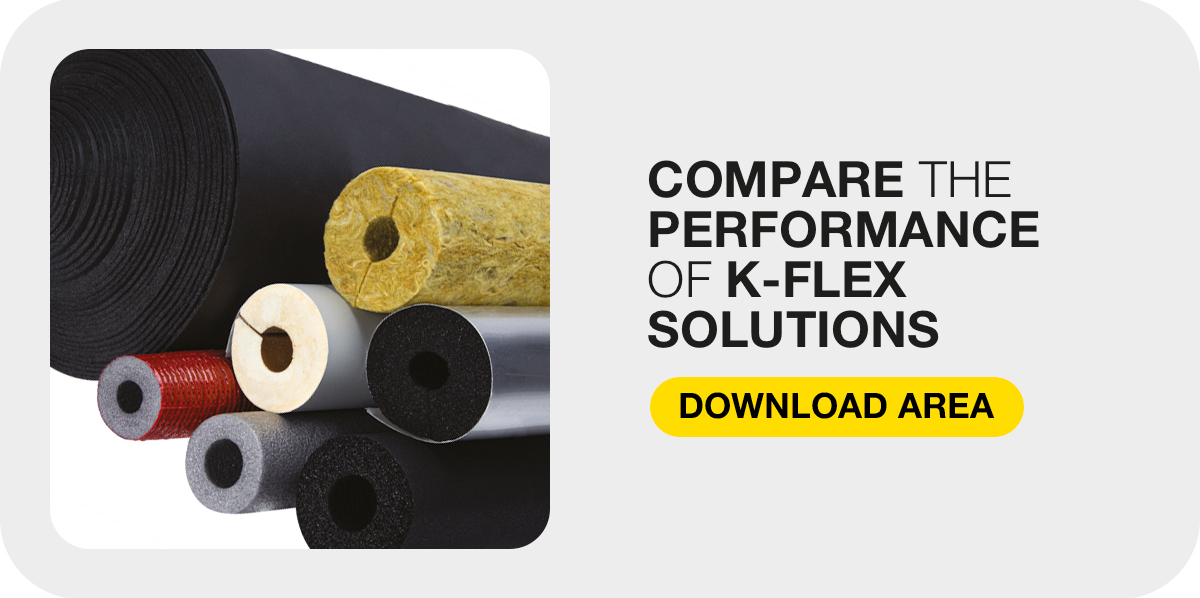
K-FLEX elastomeric insulation solutions are developed for HVAC/R, plumbing and industrial applications. The system-based approach, including insulation materials, accessories, supports and protective coverings, helps maintain insulation continuity, condensation control and long-term reliability.
FAQ
Why should pipes be insulated?
To reduce energy losses, keep fluid temperatures stable and protect the system over time.
How can condensation be prevented?
By using suitable materials, high vapour resistance, the correct insulation thickness and continuous installation across critical points.
Is thickness the only selection criterion?
No. Thermal conductivity, vapour resistance, operating temperature, reaction to fire and installation quality are also important.
Which standard applies to flexible elastomeric insulation?
EN 14304 defines the characteristics and test methods for flexible elastomeric insulation products used on technical systems.
You might also be interested in