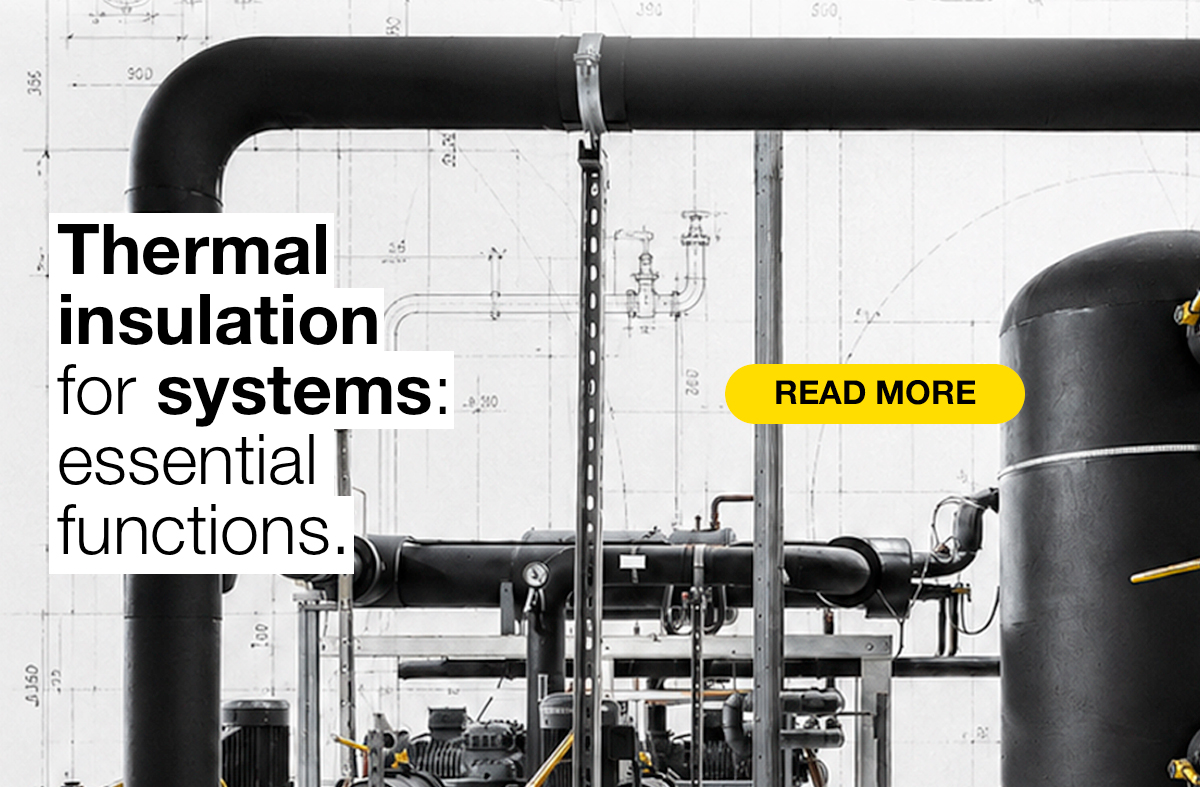
How to choose the right insulation thickness
A practical guide to comfort, efficiency and system protection
Choosing the right thermal insulation thickness is essential to help systems perform efficiently, safely and consistently over time. Insulation is not just a material wrapped around pipes, ducts or technical surfaces: it helps control temperature, reduce energy losses, prevent condensation and support everyday comfort in buildings and industrial environments.

K-FLEX contributes to this balance with a wide range of thermal, acoustic and technical insulation solutions designed for applications such as HVAC/R, plumbing, solar systems, industrial plants, oil & gas, marine, rail, OEM and acoustic comfort.
Why insulation thickness matters?
The role of insulation is to reduce unwanted heat transfer between a system and its surrounding environment. The correct thickness helps:
- Maintain stable fluid temperature
- Reduce heat losses or heat gains
- Improve energy efficiency
- Limit condensation risk on cold lines
- Protect system components
- Support indoor comfort and acoustic well-being
However, there is no universal thickness suitable for every installation. The right choice depends on the real operating conditions of the system.
Key factors to consider
1. Fluid temperature
The higher the difference between the fluid temperature and the surrounding environment, the more important insulation becomes.
For hot lines, insulation helps reduce heat dispersion and supports system efficiency.
For cold lines, it also helps keep the external surface temperature above the dew point, reducing the risk of condensation.
2. Installation environment
When systems are exposed to weather, UV radiation, mechanical stress or aggressive conditions, insulation may need to be combined with protective cladding, tapes, adhesives and accessories to ensure long-term performance.

3. Condensation risk

Condensation can form when the surface temperature drops below the dew point of the surrounding air. This is especially relevant for chilled water, refrigeration and air-conditioning systems.
To reduce this risk, it is important to consider:
- Fluid temperature
- Ambient temperature
- Relative humidity
- Continuity of the insulation system
- Correct sealing of joints, supports and fittings
4. Energy efficiency goals
A properly selected insulation thickness helps reduce unnecessary energy exchange. This can improve system stability, lower operating demand and support more efficient building and industrial performance.
The role of K-FLEX in creating comfortable environments
Comfort is the result of several factors working together: temperature, humidity, noise control, safety and system reliability.
K-FLEX supports this balance through solutions designed to help:
- Control temperature in thermal systems
- Reduce noise and vibration in buildings and technical installations
- Improve energy performance
- Protect pipes, ducts, equipment and technical surfaces
- Support long-term system durability
From elastomeric insulation to acoustic solutions, protective cladding, accessories and installation systems, the K-FLEX range helps turn insulation into an active part of building and system performance.
Quick checklist before selecting insulation thickness
Before defining the insulation thickness, evaluate:
- Operating temperature of the fluid
- Ambient temperature and humidity
- Risk of condensation
- Indoor or outdoor installation
- Pipe diameter or surface geometry
- Required energy performance
- Fire, safety or acoustic requirements
- Space available for installation
- Need for protective covering
- Technical documentation and project specifications
Need support in identifying the most suitable insulation solution for your project?
FAQ
How is thermal insulation thickness selected?
It depends on fluid temperature, ambient conditions, humidity, condensation risk, energy performance targets and project requirements.
Is thicker insulation always better?
Not necessarily. A greater thickness can improve thermal resistance, but the best choice must match the specific application, installation conditions and system goals.
Why is condensation important in cold applications?
Condensation can affect surfaces, components and surrounding areas. Correct insulation thickness and continuous installation help reduce this risk.
Can insulation improve comfort?
Yes. Insulation helps maintain stable temperatures, reduce energy waste and, when combined with acoustic solutions, support quieter and more comfortable environments.
How can K-FLEX support the right choice?
K-FLEX offers a broad range of thermal, acoustic and technical insulation solutions, together with accessories and protective systems designed for different installation needs.
You might also be interested in