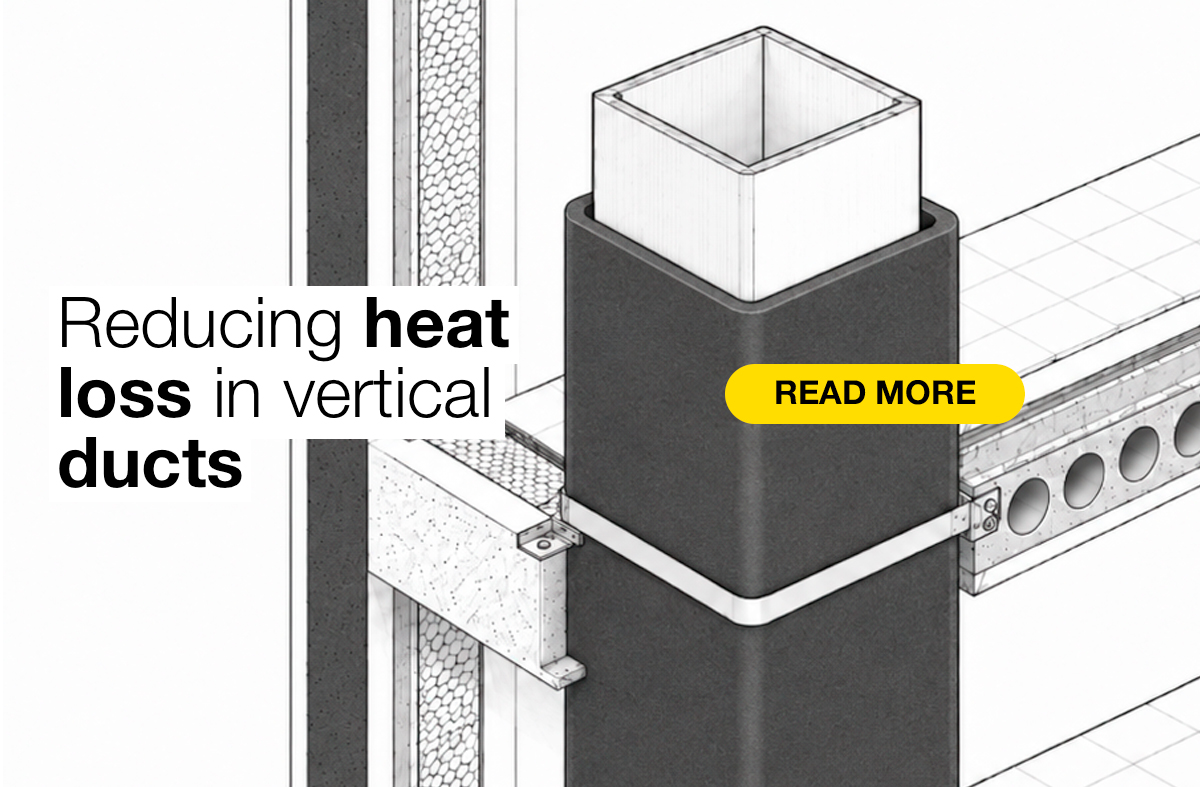
Thermal insulation for systems: essential functions

Thermal insulation for systems helps control unwanted heat exchange between the fluid, the pipework and the surrounding environment. In civil and industrial installations, it supports stable operating temperatures, reduces energy losses and helps protect system components over time.
What is thermal insulation used for?
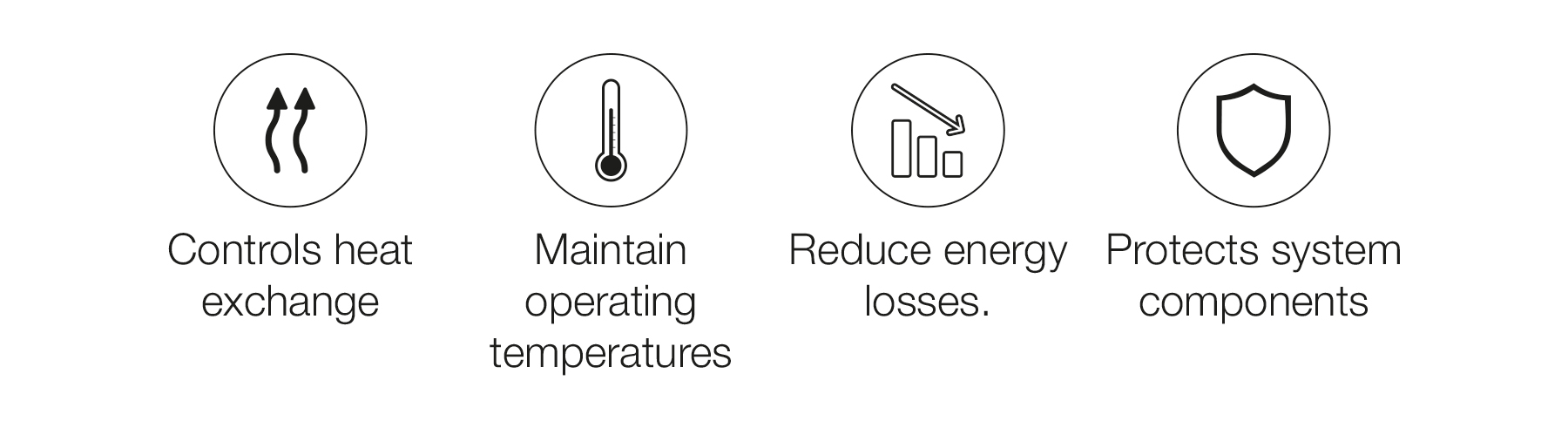
Thermal insulation is applied to technical systems where temperature control, energy efficiency and system protection are essential.
Its main applications include:
- HVAC/R systems
To support efficient heating, ventilation, air conditioning and refrigeration performance. - Heating and cooling networks
To help maintain stable fluid temperatures across the distribution system. - Hot and cold water distribution
To limit heat loss on hot circuits and reduce thermal exchange on cold circuits. - Refrigeration systems
To help maintain low operating temperatures and reduce the risk of condensation. - Industrial process lines
To support temperature stability, system continuity and long-term operational reliability.
How thermal insulation works on hot and cold circuits
Thermal insulation performs different functions depending on the operating conditions of the system.
On hot circuits, insulation helps:
- limit heat loss;
- support stable fluid temperature;
- improve energy efficiency;
- reduce unnecessary energy consumption.
On cold circuits, insulation helps:
- maintain the required low temperature;
- reduce unwanted heat gain;
- limit the risk of surface condensation;
- protect pipework and system components.
Key factors when selecting an insulation system
Choosing the correct insulation system requires evaluating several technical parameters. The most relevant factors include:
- Thermal conductivity: the material’s ability to limit heat transfer.
- Operating temperature range: the temperatures the insulation can withstand during use.
- Water vapour diffusion resistance: the ability to limit moisture and vapour penetration.
- Fire behaviour: how the material reacts when exposed to fire.
- Durability: resistance to ageing, wear and operating conditions over time.
- Installation conditions: the environment, geometry and practical constraints of the system.
Why correct installation matters
Even a high-performance insulation material can lose effectiveness if it is not installed correctly.
Critical points include:
- unsealed joints;
- discontinuities in the insulation layer;
- thermal bridges;
- poorly insulated elbows, valves or fittings;
- incorrect thickness selection;
- exposure to unsuitable environmental conditions.
A continuous and properly installed insulation layer helps maintain the designed performance of the system.
K-FLEX expertise in thermal insulation
K-FLEX brings specific expertise in thermal insulation for civil, HVAC/R and industrial applications. The company develops insulation systems designed to meet different operating conditions and application requirements.
K-FLEX supports designers, installers and companies in selecting solutions aligned with:
- performance requirements;
- system type;
- installation environment;
- temperature conditions;
- long-term reliability needs.
Discover K-FLEX thermal insulation applications
From HVAC/R systems to plumbing, refrigeration and industrial process lines, K-FLEX offers solutions for different thermal insulation applications.
FAQ
What is thermal insulation for systems?
Thermal insulation for systems is used to control heat exchange between pipes, fluids and the surrounding environment. It helps improve energy efficiency, maintain operating temperatures and protect system components.
What factors should be considered when choosing an insulation system?
Key factors include thermal conductivity, operating temperature range, water vapour diffusion resistance, fire behaviour, durability and installation conditions.
Can incorrect installation reduce insulation performance?
Yes. Unsealed joints, discontinuities, thermal bridges or incorrect thickness selection can reduce the effectiveness of the insulation system.
You might also be interested in