Air conditioning insulation: keeping cooling where it matters
A practical way to improve comfort, efficiency and reliability in air conditioning systems
In summer, an air conditioning system does more than generate cold air: it must preserve cooling capacity as refrigerant, chilled water or treated air moves through the building. Correct air conditioning system insulation reduces unwanted heat gain, helps prevent surface condensation and supports stable indoor comfort, especially when pipework or ducts pass through hot, humid or non-conditioned areas.
For designers, installers and facility managers, insulation is therefore not a finishing detail. It is a technical part of the system that affects energy performance, moisture control, component protection and maintenance over time.
Why insulation matters in summer cooling systems
Cold lines absorb heat from the surrounding environment whenever insulation is missing, damaged or incorrectly sized. This can increase the load on compressors, pumps, fans and terminal units, particularly in hotels, hospitals, offices, retail spaces, data centres and industrial plants.
Insulation helps to:
- limit heat gain along refrigerant lines, chilled water pipes and air ducts;
- keep transported air or fluids closer to the design temperature;
- reduce the risk of condensation on cold surfaces;
- protect materials from moisture-related degradation;
- improve system reliability and indoor comfort.
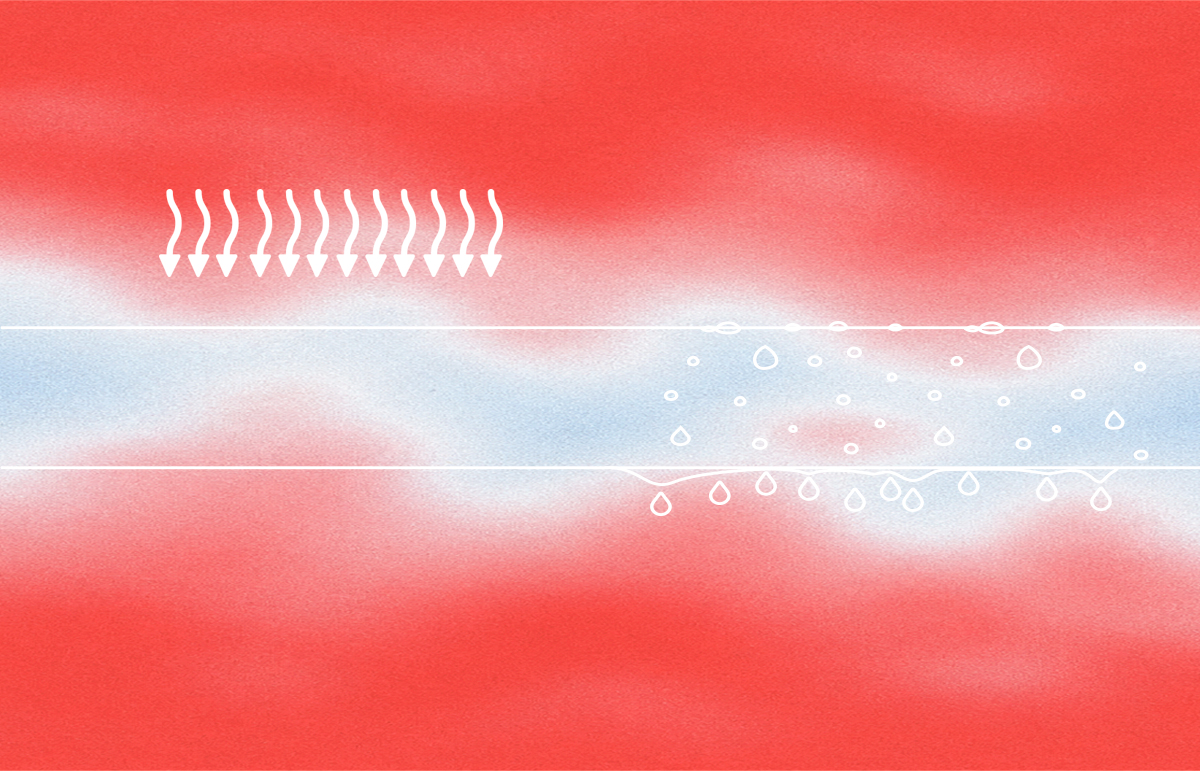
Condensation is one of the most critical summer risks. When a cold surface falls below the dew point of warm, humid air, water can form on pipes, ducts, valves or fittings. In technical spaces, ceilings or sensitive environments, this may lead to dripping, corrosion under insulation, mould risk, damaged finishes and unplanned maintenance.
Different parts of the system need different insulation choices
Air conditioning systems include several areas with different technical needs.
Refrigerant lines in split, multi-split and heat pump systems require flexible, continuous insulation that can be installed cleanly even in limited spaces. K-FLEX SPLIT and K-FLEX SPLIT TWIN are designed to connect indoor and outdoor units in split and multi-split air-conditioning systems, combining copper pipe and PE insulation.

Chilled water networks require careful evaluation of insulation thickness, vapour resistance, pipe supports, valves, flanges and joints. Even small discontinuities can create thermal bridges or moisture entry points.
Air ducts need insulation that limits heat gain and helps manage external condensation when cold air passes through warm or humid areas. K-FLEX ST DUCT is designed for duct applications, with a self-adhesive surface and 1500 mm width intended to support installation on metal ducts.

For exposed outdoor lines, mechanical and environmental protection also becomes important. K-FLEX AL CLAD SYSTEM combines elastomeric insulation with a multilayer covering resistant to ultraviolet rays and atmospheric agents.

Technical data and certifications to check
Insulation selection should be based on verified technical data, not on generic product categories. Key factors include:
- Thermal conductivity
Lower thermal conductivity helps reduce heat exchange, but values must be read together with the test temperature and the project’s real operating conditions. - Water vapour behaviour
Vapour resistance and sealed joints are essential in cold applications because moisture entering the insulation can reduce performance and increase degradation risk. - Reaction to fire
Fire classification must match the project and local regulatory context. - Operating temperature range
The insulation must remain suitable for the expected temperatures of refrigerant, chilled water, ducts and surrounding environments. - Exposure conditions
Outdoor installations may require protection from UV radiation, weather, impact and mechanical stress.
The role of installation quality
Even a suitable insulation material can underperform if installation is not continuous. Open joints, incompatible adhesives, unsealed fittings, damaged coverings or non-insulated supports can become points of heat gain and moisture penetration.
For this reason, HVAC/R insulation should be considered from the design stage: available space, pipe supports, access for maintenance, vapour barrier continuity, external protection and documentation all influence the final result.
K-FLEX solutions for HVAC/R applications can support designers, contractors and facility managers in selecting insulation systems for cooling performance, condensation control and long-term protection, provided that product choice, sizing and installation are aligned with the real operating conditions.

FAQ
Why is insulation important in air conditioning systems?
Insulation helps keep cooling inside pipes and ducts, reducing heat gain, condensation risk and unnecessary system workload.
What causes condensation on air conditioning pipes?
Condensation forms when the surface temperature of a pipe or duct falls below the dew point of the surrounding humid air.
Is the same insulation suitable for all HVAC/R components?
No. Refrigerant lines, chilled water pipes, air ducts, valves and outdoor sections have different requirements for thickness, vapour resistance, flexibility, fire behaviour and protection.
What should be checked before choosing HVAC/R insulation?
Key factors include thermal conductivity, vapour resistance, operating temperature, reaction to fire classification, exposure conditions, installation details and the applicable technical documentation.
You might also be interested in