Reducing heat loss in vertical ducts
How insulation help to reduce heat loss in vertical ducts in multi-storey buildings
In multi-storey buildings, vertical ducts and risers play a key role in distributing air, hot water, chilled water and technical fluids. They connect plant rooms, intermediate floors and service areas, often passing through shafts, non-conditioned spaces and zones with different temperature and humidity levels.
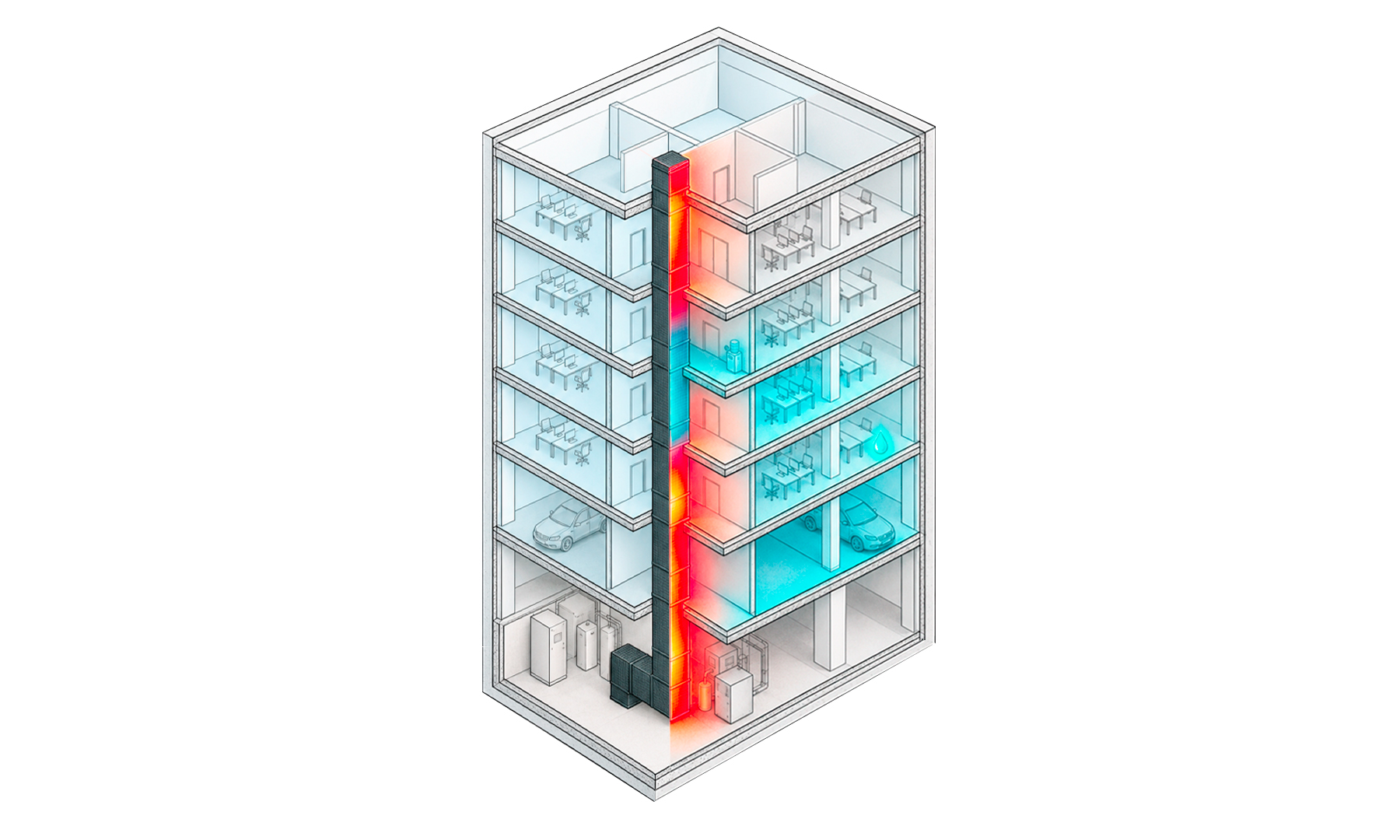
This illustration is provided for demonstration purposes only. As it was generated with the support of AI, it may contain inaccuracies or simplified representations of building systems, technical installations or construction details.
This is why insulation is not just an accessory. It is a technical layer that helps reduce heat loss, limit temperature variations, prevent condensation and support the overall comfort of indoor environments.
When a vertical duct is not properly insulated, it can become a point of unwanted heat exchange. Warm systems may lose energy before reaching the upper floors, while cooling or ventilation systems may absorb heat from surrounding spaces. The result can be lower efficiency, uneven comfort and greater workload for the system.
What effective insulation helps achieve
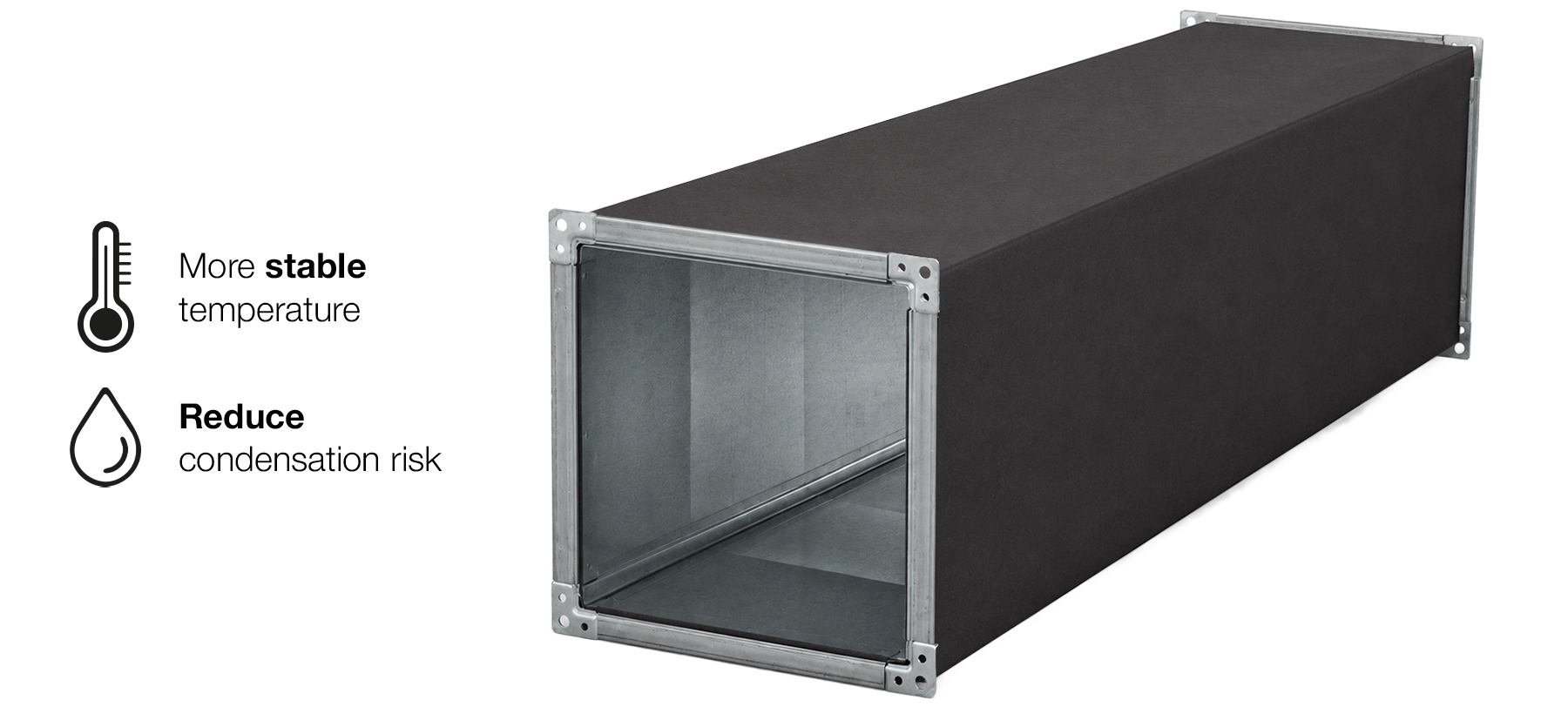
This image was generated using AI. Any references to products and/or applications may not correspond to reality and was created for promotional purposes only.
A well-designed insulation system can support:
- temperature control, keeping air and fluids more stable along the vertical route;
- energy efficiency, reducing losses across several floors and operating hours;
- condensation prevention, especially on cold surfaces in humid areas;
- system protection, helping limit the effects of moisture, external agents and mechanical stress;
- acoustic comfort, reducing the transmission of noise and vibration through technical shafts.
The role of K-FLEX
K-FLEX develops thermal and acoustic insulation solutions for HVAC/R systems, ducts, pipework, heating and cooling networks, industrial applications and technical environments.
Its range includes flexible insulation materials, duct and pipe solutions, acoustic systems, protective claddings, tapes, adhesives, supports and accessories designed to help maintain installation continuity around joints, bends, brackets and transitions.
This integrated approach makes insulation part of the building’s performance, not just a material applied around a duct. By supporting temperature stability, noise reduction, energy efficiency and long-term system protection, K-FLEX helps create environments that are more comfortable, efficient and reliable.
Key points to consider
Before selecting an insulation solution, it is important to evaluate:
- the operating temperature of the system;
- whether the duct carries warm air, chilled air or technical fluids;
- the presence of shafts, plant rooms or non-conditioned spaces;
- the risk of condensation along the vertical route;
- the need for acoustic performance or protective cladding;
- the continuity of insulation around critical points.
Insulating vertical ducts is a technical choice that supports efficiency, comfort and system protection.
FAQ
Why insulate vertical ducts?
Because they cross several floors and different environments, where heat loss, heat gain and condensation can reduce system efficiency.
Does insulation improve comfort?
Yes. Stable air and fluid temperatures help reduce differences between floors and support more consistent indoor conditions.
Can insulation help reduce noise?
Yes. K-FLEX acoustic solutions can help reduce noise and vibration from ducts, pipework and technical systems.
You might also be interested in