What does “closed-cell” mean?
The technology that helps control heat and water vapour
Reading time: 3 minutes
A structure that improves efficiency, condensation control and system reliability
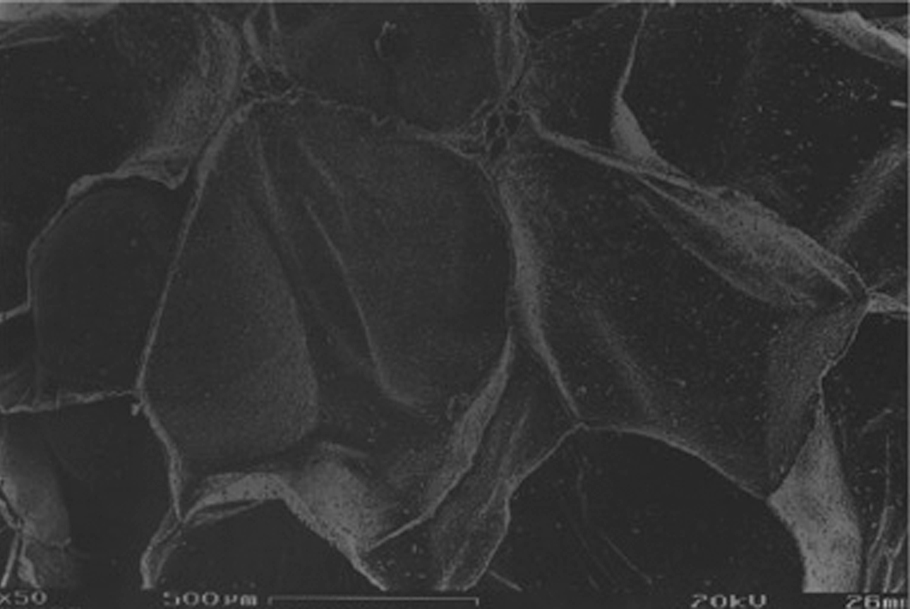
A closed-cell insulation material consists of gas-filled cavities separated by continuous walls. This structure slows down both heat transfer and water vapour diffusion, two essential functions in HVAC/R systems, chilled-water pipes and surfaces operating below ambient temperature.
Unlike open-cell materials, in which some cavities are interconnected, a closed-cell structure restricts the paths available to air and moisture. It does not make the material completely impermeable, but it provides high resistance to water vapour penetration.
How closed cells reduce heat transfer
Heat naturally moves from warmer areas towards colder ones. In a chilled-water pipe, for example, thermal energy from the surrounding environment tends to flow towards the cold fluid.
Inside elastomeric insulation, the gas enclosed within each cell cannot circulate freely or generate significant convective currents.
The closed-cell structure holds gas in small, sealed cells, helping reduce heat transfer through the material. This contributes to low thermal conductivity, helping slow heat gain or loss in insulated systems.
This property is expressed by the λ-value, measured in W/(m·K): the lower the λ-value, the less heat passes through the material under the specified conditions.
For K-FLEX ST, a closed-cell elastomeric insulation material available in tubes and sheets, the declared values are:
- λ = 0.033 W/(m·K) at 0°C for thicknesses up to 25 mm;
- λ = 0.036 W/(m·K) at 0°C for thicknesses above 25 mm.
These values must always be checked against the actual format and thickness specified. The performance of the complete system also depends on pipe geometry, operating temperatures, correct sizing and installation quality.
Why water vapour resistance is equally important
In cold systems, limiting heat transfer is not enough. Water vapour in the air tends to migrate towards colder areas and may turn into liquid water when it reaches a surface or layer below the dew point.
A closed-cell structure hinders this migration. Its performance is described by the water vapour diffusion resistance factor μ: the higher the value, the greater the material’s resistance compared with a layer of air of the same thickness.
For K-FLEX ST, the declared values are:
- μ ≥ 10,000 for thicknesses up to 25 mm;
- μ ≥ 7,000 for thicknesses above 25 mm.
Low thermal conductivity and high water vapour resistance therefore perform complementary functions. The first helps control heat flow and surface temperature, while the second limits moisture penetration into the insulation system.

FAQs
What does closed-cell insulation mean?
It means that the material contains small cavities separated by continuous walls. This configuration limits gas circulation and hinders water vapour diffusion.
Do closed cells completely prevent water vapour from passing through?
No. They provide high resistance to water vapour diffusion but do not make the material completely impermeable. The continuity of joints and installation is also essential.
What is the difference between thermal conductivity λ and the μ-value?
Thermal conductivity λ describes the material’s ability to transfer heat. The μ-value indicates its resistance to water vapour diffusion compared with air.
Does closed-cell insulation always prevent condensation?
Not by itself. Condensation prevention requires an appropriate thickness for the design conditions, correct installation and continuous treatment of joints, supports, bends and other critical details.