Multilayer pipes: when are they the right choice?
Reading time: 3 minutes
The right piping system can simplify installation while improving the efficiency, durability and reliability of building services.
A multilayer pipe is a suitable choice when a project requires the flexibility of polymer piping together with dimensional stability, controlled thermal expansion and an oxygen barrier. These characteristics make it useful for hot and cold water distribution, heating circuits and embedded radiant systems.
However, no piping material is suitable for every application. The decision must consider the transported fluid, operating temperature and pressure, installation layout, environmental exposure, insulation and local compliance requirements.

How multilayer piping works
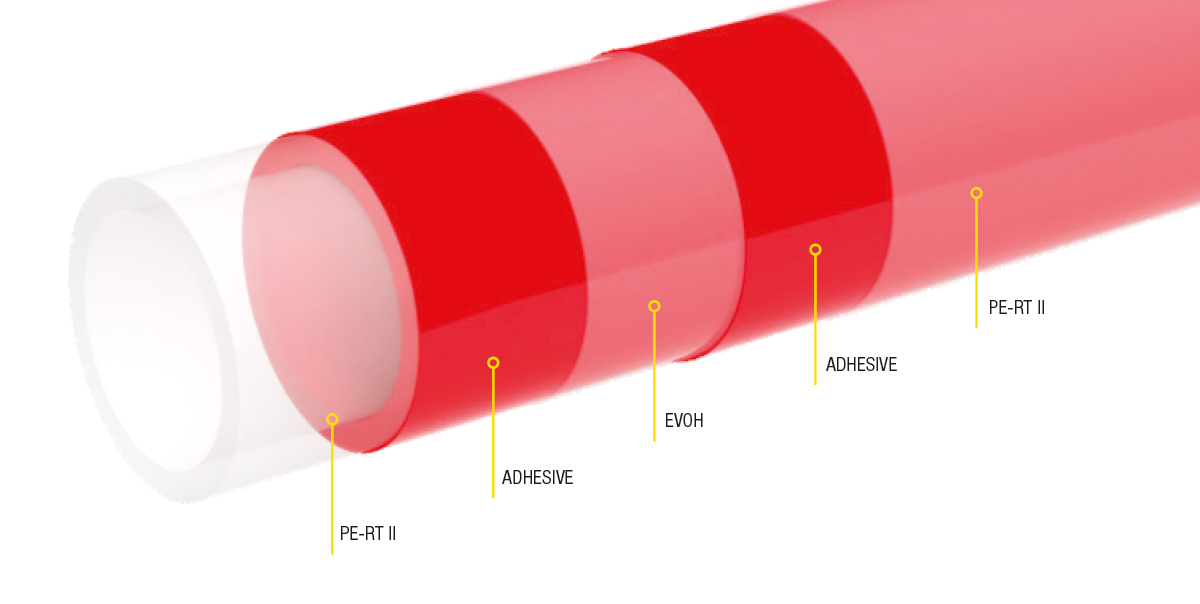
A common multilayer pipe consists of five layers: polymer, adhesive, aluminium, adhesive and polymer. Each material performs a specific function:
- the polymer layers provide flexibility and protect the pipe structure against corrosion;
- the adhesive layers bond materials with different mechanical properties;
- the aluminium core improves dimensional stability and helps the pipe retain its installed shape;
- the continuous metal layer limits oxygen diffusion through the pipe wall.
The result is an engineered composite structure that combines the installation advantages of polymers with the stability provided by metal.

Where multilayer pipes provide an advantage
In hot and cold water systems, their low weight and bendability can simplify handling and allow long sections to be installed with fewer intermediate fittings. This can be particularly useful in renovations, confined spaces and irregular installation routes.
For potable-water applications, the suitability of both pipes and fittings must be documented for the destination market. The ISO 21003 series establishes requirements for multilayer piping systems used in hot and cold water installations inside buildings. Compliance with this standard does not automatically replace national drinking-water approvals or local building regulations.
In closed-loop heating systems, the oxygen barrier helps limit oxygen diffusion through the pipe wall. This contributes to protecting pumps, valves, manifolds and heat exchangers from conditions that may encourage corrosion and sludge formation.
An oxygen barrier does not replace correct water treatment, air removal, hydraulic balancing or commissioning. The entire circuit must be designed and maintained according to applicable standards and equipment manufacturers’ instructions.
Multilayer pipes in radiant systems
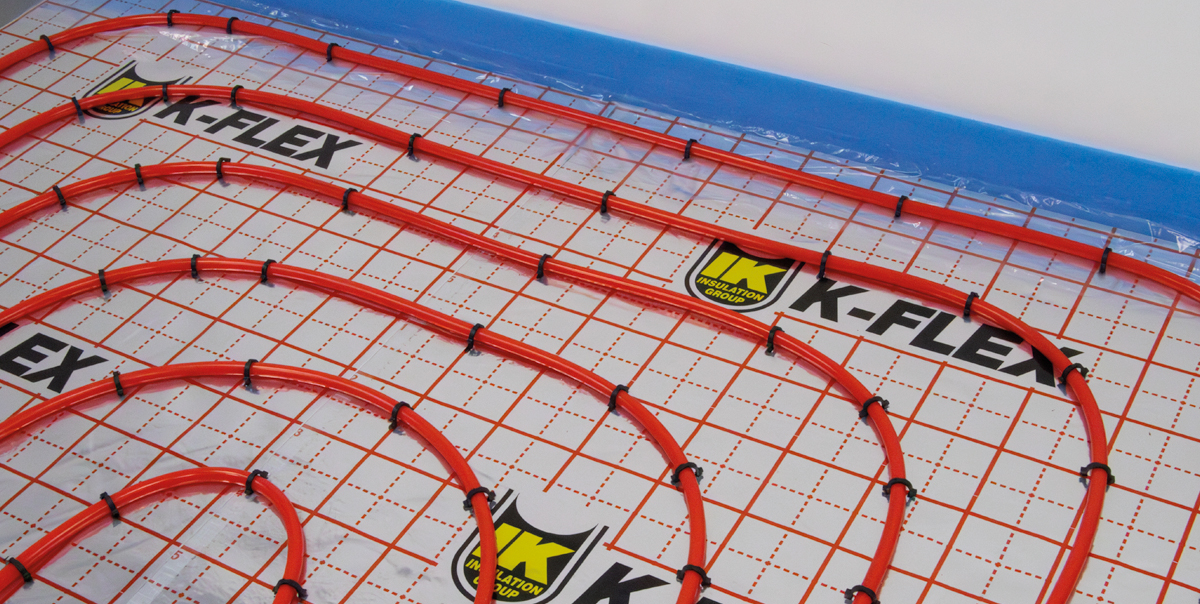
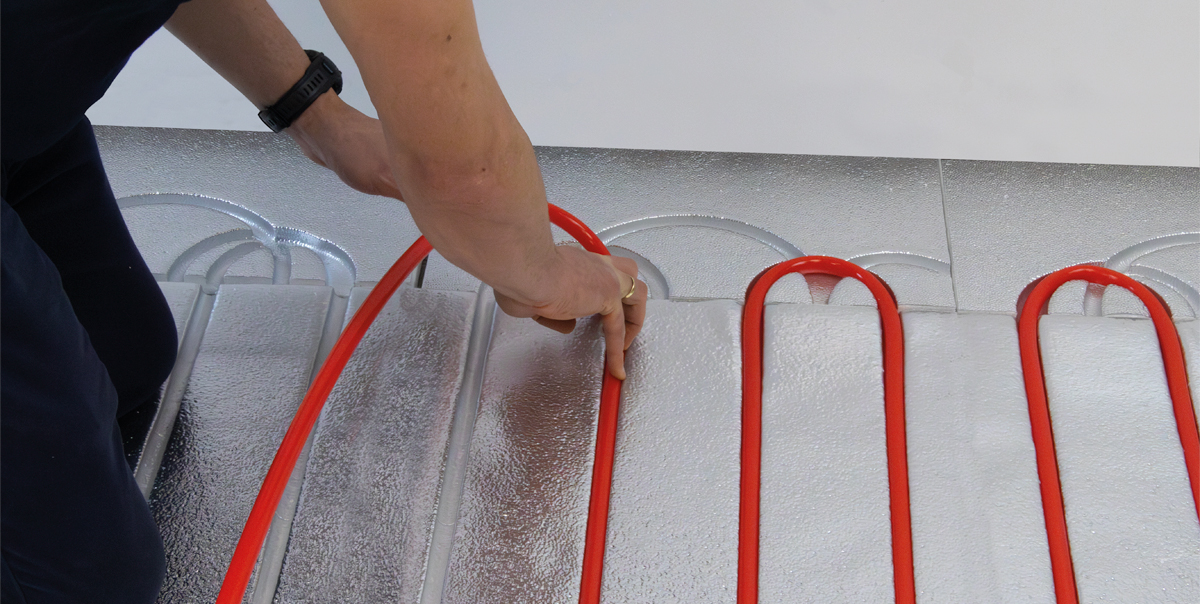
Multilayer piping can also be used in underfloor, wall and ceiling heating or cooling systems when dimensional stability and oxygen-tightness are important.
The choice must consider bending requirements, circuit length, fixing method, operating conditions and the overall system configuration. For international projects, ISO 11855-5:2021 provides requirements for installing water-based embedded heating and cooling systems. Regional or national standards may introduce additional provisions.
Pre-insulated configurations may help reduce heat transfer and protect the pipe during installation. Nevertheless, insulation thickness must be selected according to fluid and ambient temperatures, permissible energy losses, condensation risk, fire requirements and local energy regulations.
Factors to consider
- Temperature and pressure: assess normal operation, peak conditions, thermal cycles and the declared application class.
- Hydraulic performance: verify internal diameter, flow rate, pressure drop and water velocity.
- Installation geometry: respect the declared bending radius and avoid kinks, crushing or ovalisation.
- System compatibility: use documented combinations of pipes, fittings, pressing profiles and tools.
- Environmental protection: evaluate exposure to UV radiation, impact, abrasion and construction materials.
- Insulation: calculate the thickness needed to control heat transfer and condensation in actual operating conditions.
Compliance applies to the complete system
Installation reliability does not depend on the pipe alone. Incorrect cutting, insufficient calibration, incomplete insertion or the wrong pressing equipment can compromise a joint even when the pipe has been correctly selected.
ISO 21003-3 specifically addresses fittings for multilayer hot and cold water systems. Before installation, project teams should verify component compatibility, joint preparation, pressure-testing requirements and accessibility for inspection.
Potable-water approvals, fire classifications and other certifications must always be checked for the specific component, application and destination market. A certification covering one product or configuration should not be extended to an entire range unless the documentation explicitly confirms it.
A system-based decision
Multilayer piping offers clear benefits when a project requires flexibility, low weight, shape retention, controlled thermal expansion, corrosion resistance and an oxygen barrier.
These advantages are fully realised when pipes, fittings, insulation and installation procedures are selected as one coherent system. K-FLEX supports international projects with technical solutions for water distribution, heating, cooling and insulation applications.
FAQs
Can multilayer pipes be used for potable water?
Yes, provided that pipes and fittings have the approvals required in the country of installation and are suitable for the declared operating conditions.
Why is an oxygen barrier important?
It limits oxygen diffusion through the pipe wall, helping reduce corrosion risks for metallic components in closed hydronic systems.
Are multilayer pipes suitable for radiant heating and cooling?
Yes, when the pipe characteristics, circuit configuration and installation methods comply with the relevant standards and design requirements.
Does pre-insulation always prevent condensation?
No. Condensation control depends on insulation thickness, vapour resistance, joint continuity, fluid temperature and ambient conditions.