Noise and how we can control it
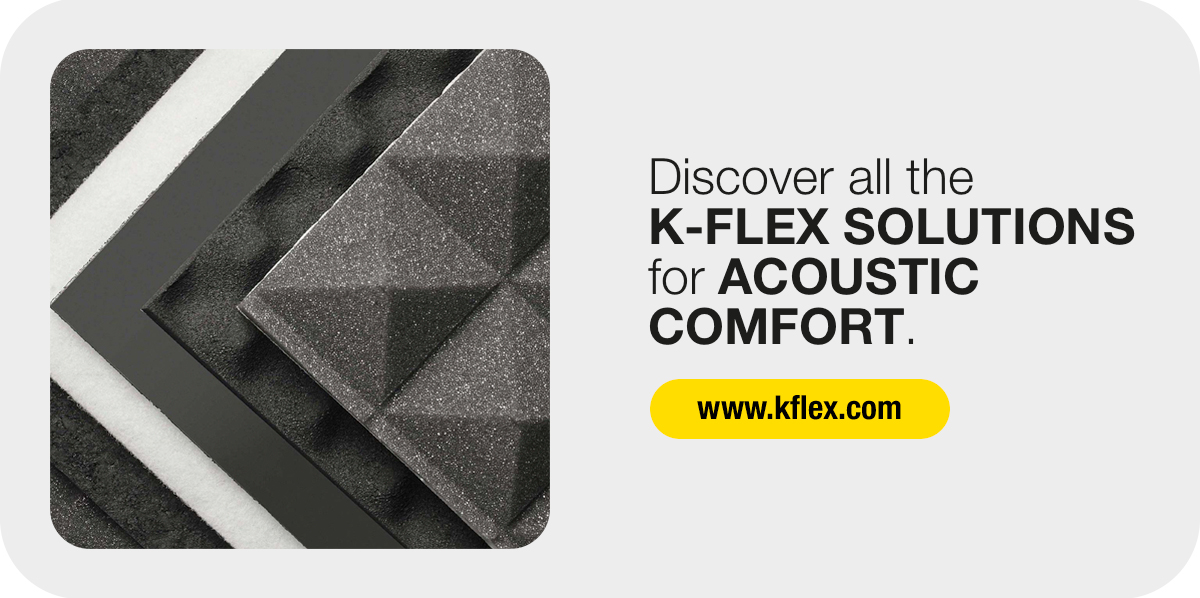
Noise control is the process of reducing unwanted sound and vibration inside buildings. It is essential for improving acoustic comfort in homes, offices, hotels, hospitals, schools, commercial spaces and industrial environments.
Noise can be generated by HVAC/R systems, ventilation ducts, drainage pipes, machinery, pumps and compressors. It can then travel through air, walls, floors, ceilings, pipes and building structures, affecting occupant wellbeing and the perceived quality of indoor spaces.
For this reason, acoustic insulation should be considered from the earliest design stages, together with energy efficiency, safety and long-term system performance.
How noise travels in buildings
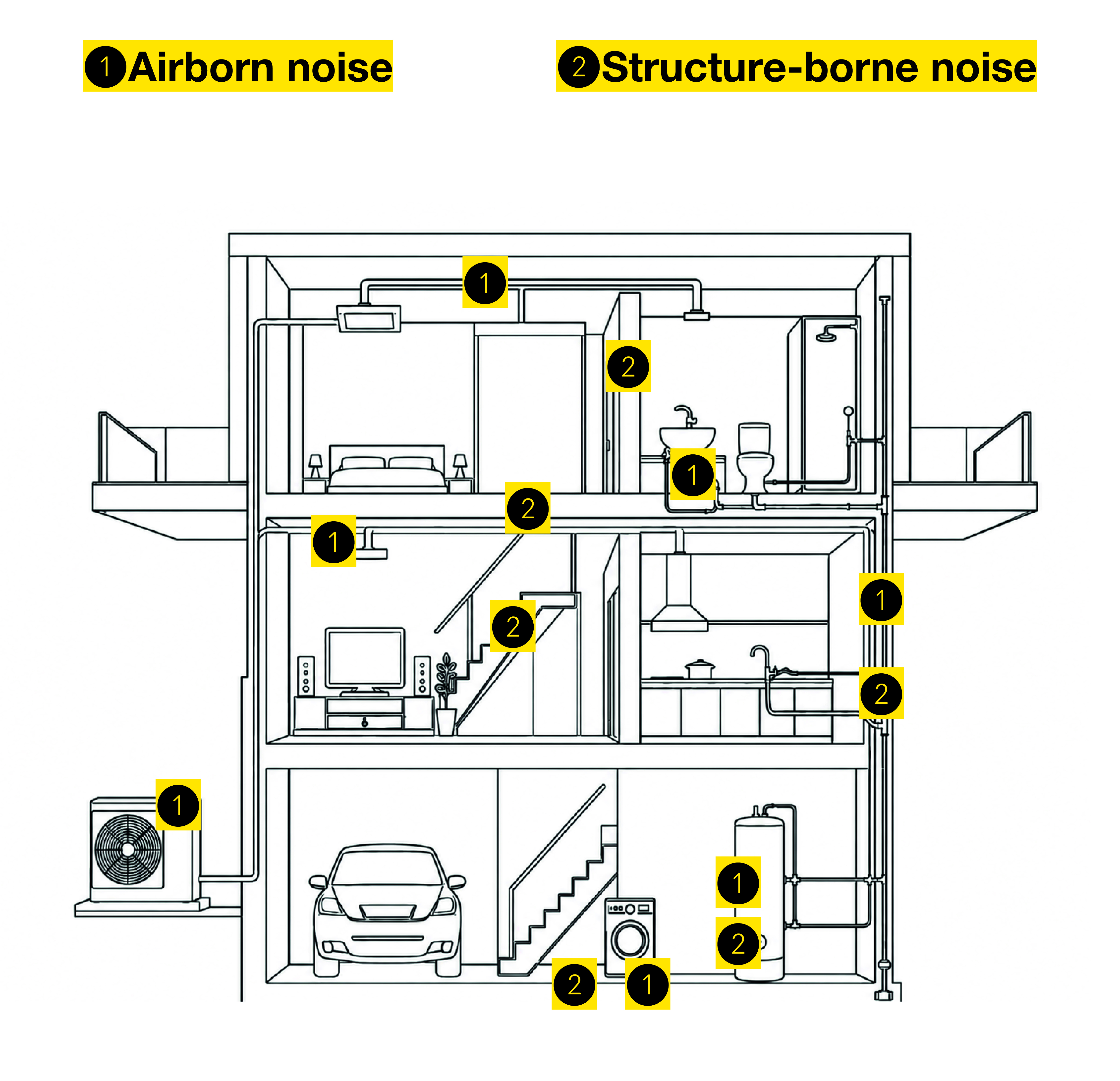
Noise mainly spreads in two ways:
- Airborne noise, transmitted through air, partitions, ceilings and ducts.
- Structure-borne noise, generated by vibrations travelling through floors, pipes, supports, beams, columns, staircases and elevator shafts.
An effective acoustic system does not only treat the noise source. It also reduces the transmission path, helping limit acoustic bridges and lower perceived noise levels in occupied spaces.
K-FLEX acoustic insulation applications
K-FLEX provides solutions for sound insulation, sound absorption and vibration reduction across building, HVAC/R, industrial and OEM applications.
- Floor insulation: floating screed systems help reduce impact noise by placing a resilient layer between the screed and the structure.
- Wall insulation: K-FLEX solutions can be integrated into rigid walls, double drywall systems, metal-frame walls and lightweight plasterboard partitions to reduce airborne noise between rooms.
- Structural insulation: resilient materials applied to staircases, elevator shafts, beams and columns help reduce vibration transmission through the building.
- HVAC/R and technical systems: K-FLEX acoustic solutions support noise control in ventilation ducts, OEM components, machinery, drainage pipes and waste systems.
Why choose K-FLEX acoustic solutions
Reliable acoustic performance depends on the right material, correct system design and continuous installation. Gaps, rigid fixings, compression points or direct contact with the structure can create acoustic bridges and reduce insulation effectiveness.
K-FLEX supports designers and installers with acoustic solutions developed for different technical requirements, helping create quieter, more efficient and more comfortable indoor environments.
From floors and walls to structures, HVAC/R systems, OEM applications and drainage pipes, K-FLEX acoustic solutions help reduce sound transmission, improve indoor comfort and increase the functional value of buildings.